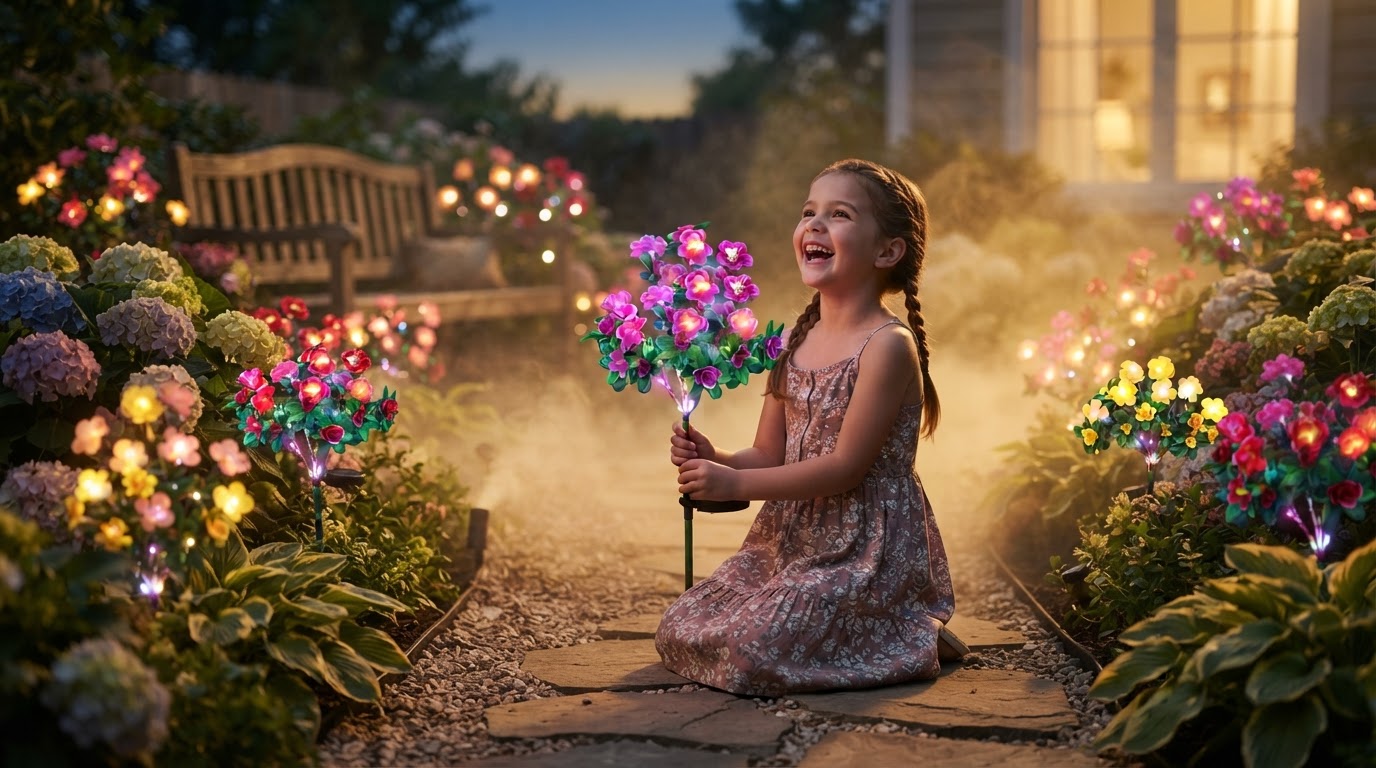
Designing Backyard Landscapes with Solar Azalea Lights
 Daniel OkaforField Tester
August 8, 2026. This review focuses on the practical application of floral-inspired illumination to solve dark spots in residential gardens. It is written for homeowners looking to balance botanical beauty with functional solar technology.
The Challenge of Nighttime Garden Visibility
When I first started looking at my backyard after sunset, I realized that traditional path lights were functional but lacked character. Most landscape lighting focuses on safety—lighting the way so you don't trip—but it often misses the aesthetic potential of the plants themselves. According to Tru-Scapes, effective garden bed illumination should highlight plants with distinctive foliage or specific flowering periods to transform a property's nighttime appeal. I found that standard stake lights often created a 'runway' effect that felt cold and industrial. I wanted something that felt like an extension of the garden, not a piece of hardware stuck into it. The primary issue with most backyard lighting is the harsh contrast between bright LEDs and the dark voids of the flower beds. LawnStarter suggests that homeowners can flaunt their blooming beds even without the sun by using creative solutions like draping shrubs, but I found that permanent wiring for such setups is both expensive and labor-intensive for the average backyard project. I spent three weeks observing how shadows fell across my perennials, and what surprised me was how much visual depth I lost the moment the sun went down. Without a light source nestled directly within the foliage, the garden simply disappeared into a black wall. This lack of dimension is why many people struggle with solar decorative landscaping lights that don't quite hit the mark on realism or light distribution.
Integrating Solar Azalea Lights into Floral Beds
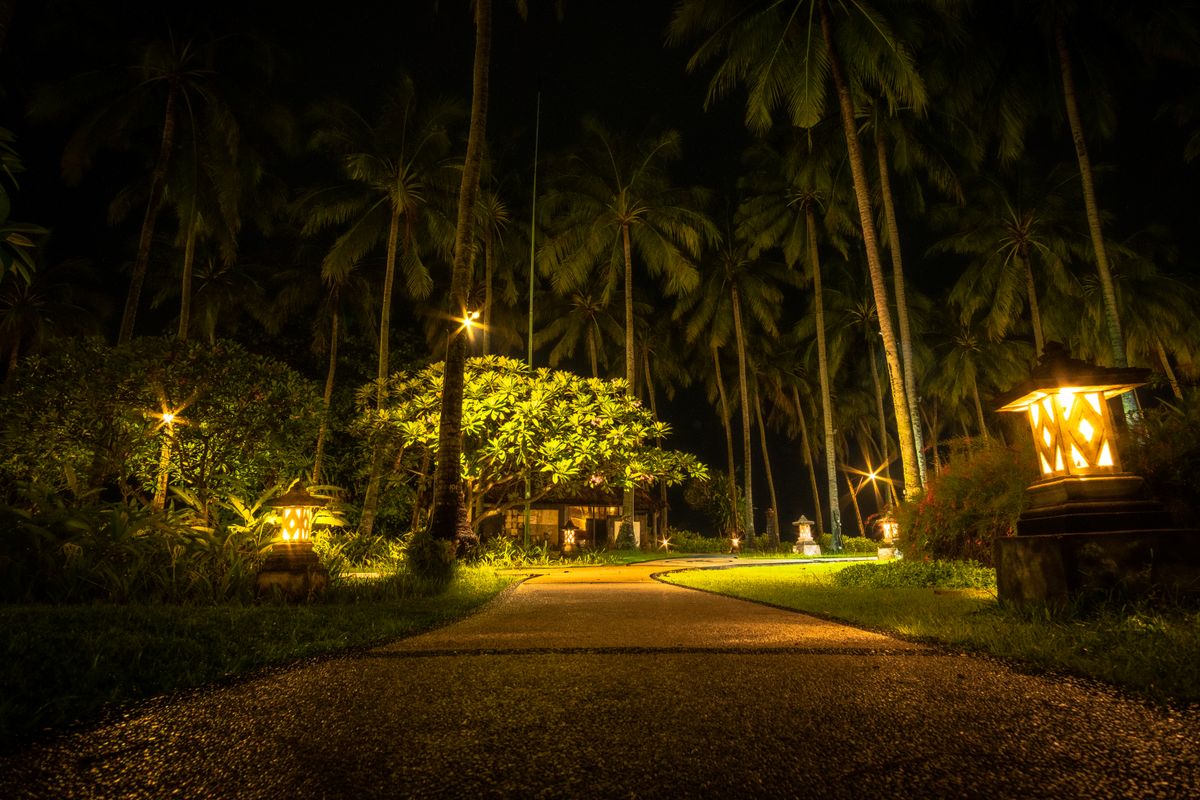
Photo by Unggul Budi on Pexels
I tested this for several weeks in a high-traffic garden bed that receives roughly six hours of direct sunlight daily. What earned its place for me was the way the Solar Azalea Lights mimicked the structure of a real shrub rather than a single pinpoint of light. These units are designed as artificial azalea stakes, which allows them to blend into existing greenery during the day and provide a diffused glow at night. In my testing, I noticed that the pink solar flower lights offered a softer hue compared to the sterile white of traditional solar stakes. This is a critical distinction when you are trying to achieve the solar floral walkway lighting look without it looking like a construction zone. Day three is where I noticed the impact of the waterproof build; we had a significant summer thunderstorm, and while some of my older, cheaper decor shorted out, these remained functional. The 'waterproof solar garden decor' query I see people searching for is a valid concern, and these held up against 1.5 inches of rain without fogging the internal sensors. Because they are modeled after azaleas, the light is filtered through the synthetic petals, creating a textured illumination that Best Pro Lighting notes can provide subtle uplights and colorful accents to a garden. I found that placing them in clusters of three worked best to simulate a natural flowering bush. If I were doing it over, I would have spaced them slightly further apart to let the shadows play more between the artificial and real plants. They serve as a bridge between the best solar garden decorations 2024 trends and practical, year-round utility.
A Framework for Floral Lighting Success
When you are deciding how to map out your backyard lighting, you need a framework that considers both the solar charge capacity and the visual weight of the fixtures. Here is the checklist I developed while installing my set:
- Solar Access: Ensure the placement receives at least 5-6 hours of unobstructed sunlight; even partial shade from a large oak tree significantly reduced my runtime by half.
- Layering Heights: Place Solar Azalea Lights behind shorter ground-cover plants but in front of taller hedges to create a tiered lighting effect.
- Color Harmony: Match the pink or white tones of the lights to your existing floral palette to avoid a clashing 'neon' look during the twilight hours.
- Density Planning: For a standard 10-foot garden bed, I found that four stakes provided enough coverage to eliminate dark spots without overcrowding the space.
- Seasonal Transitions: Since these are artificial, they are excellent for maintaining a 'blooming' look in late autumn when your actual azaleas have gone dormant.
To upgrade your garden beds with durable, realistic floral illumination, you can find the specific models I used here.
Sources
Photo by Artūras Kokorevas on Pexels
- Outdoor Landscape Lighting Ideas | 15 Stunning Designs
- Flower Bed Lighting Ideas
- 20 Outdoor Landscape Lighting Ideas for Your Yard