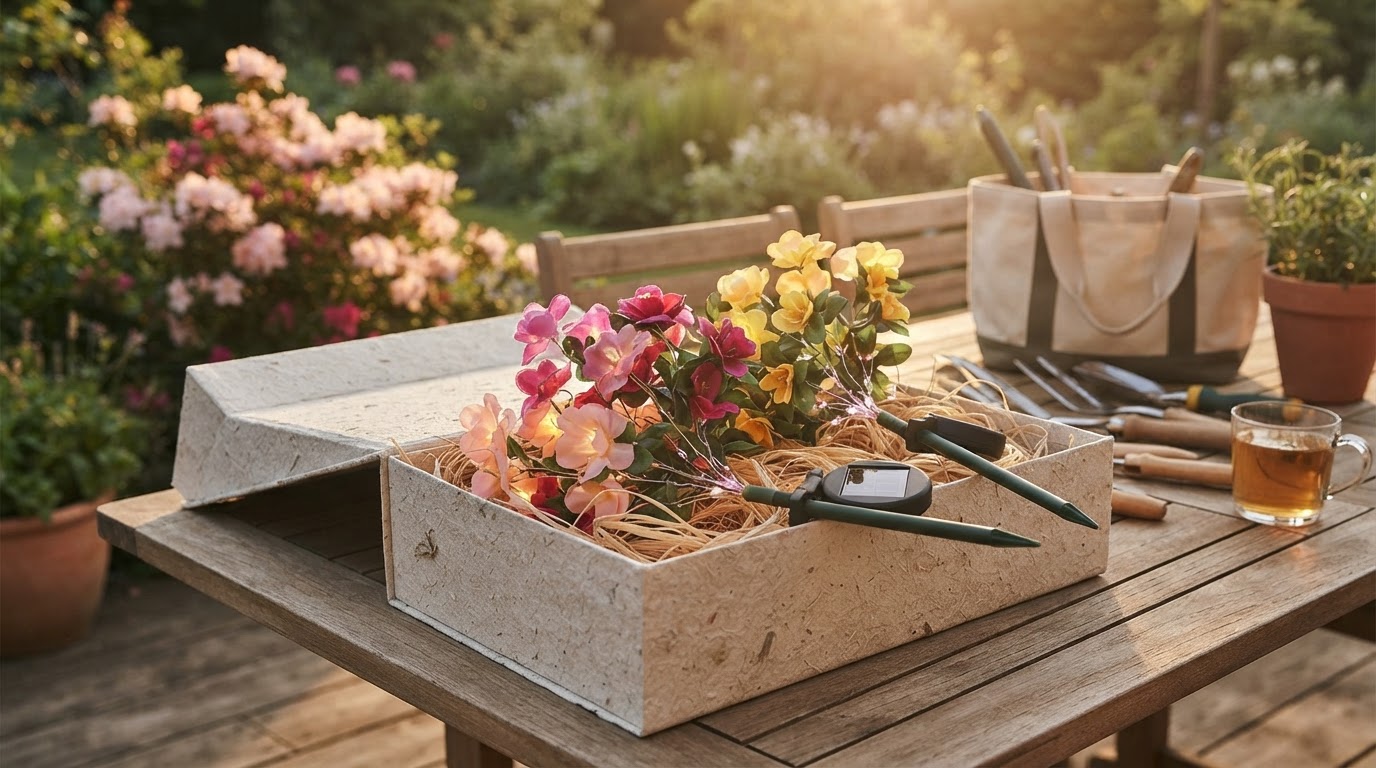
Solar Azalea Lights Framework for Landscape Flowers
 Sam VasquezBuying Guide Lead
September 3, 2026 — The shift toward decorative solar integration has reached a peak this season, with Solar Azalea Lights emerging as a primary choice for homeowners seeking to blend illumination with botanical aesthetics. While standard path lights provide utility, the demand for floral-inspired fixtures has grown as property owners look for ways to maintain visual interest after sundown. According to lighting industry reports from the International Dark-Sky Association, the move toward shielded, low-impact decorative lighting helps reduce light pollution while enhancing residential curb appeal.
The Professional Landscape Selection Framework
Photo by ROMAN ODINTSOV on Pexels
When I evaluate floral lighting, I look at the balance between structural durability and light quality. Most generic solar flowers use thin plastic stems that degrade under UV exposure within a single season. Between these two, I'd go with the Solar Azalea Lights because they utilize a reinforced internal structure that supports the weight of the petals without drooping. For those debating between different styles, the solar garden flowers pink variant offers a softer hue that mimics real blooms, whereas many competitors use high-intensity LEDs that look harsh and synthetic. If you are prioritizing year-round resilience, checking for waterproof solar landscape flowers is non-negotiable; look for an IP65 rating to ensure the internal circuitry survives heavy rain. While artificial solar flower stakes are common, the Solar Azalea Lights stand out due to their integrated monocrystalline solar panels which convert energy more efficiently in partial shade than cheaper polycrystalline alternatives. Here's what I'd actually buy: the multi-head azalea units. They provide a fuller cluster effect that is essential when enhancing natural landscaping with solar azalea lights. Skip this if you are looking for high-lumen security lighting, as these are designed for ambient accentuation rather than task illumination. The runtime typically averages 8 to 10 hours on a full charge, which is sufficient for most residential needs from dusk until dawn.
Expert tip: To maximize the lifespan of your lights, wipe the solar panel with a damp microfiber cloth once a month to prevent dust buildup from reducing charging efficiency.
For those seeking a reliable balance of durability and realistic floral design, these units represent a significant upgrade over entry-level garden stakes.