Solar Garden Lights FAQ: Maintenance, Waterproofing, and Setup
Answers to Common Solar Lighting Questions
Whether you are shopping for new decorative landscape stakes or troubleshooting existing fixtures, these answers address common questions about outdoor lighting technology. To learn more about garden illumination strategies, visit the main guide.
How do dusk-to-dawn solar garden lights work?
Solar lights equipped with automatic dusk-to-dawn operation feature an integrated light sensor on the solar module. During the day, the sensor detects ambient sunlight and directs energy from the solar panel into the rechargeable battery. When daylight fades below a specific threshold, the sensor closes the light circuit, turning on the 42 high-brightness LEDs automatically.
What does an IP65 waterproof rating mean for garden lights?
An IP65 waterproof rating indicates high protection against liquids and solids. The digit '6' means the unit is completely dust-tight. The digit '5' certifies that the fixture can withstand water jets and heavy rainfall from any angle without water entering electrical enclosures. This makes IP65 rated lights suitable for year-round outdoor placement.
How long do solar garden lights stay illuminated at night?
When fully charged after 6-8 hours of direct sunlight, high-quality solar fixtures can operate for up to 8-10 hours continuously. Total runtime varies depending on geographical location, cloud cover, seasonal daylight length, and solar panel cleanliness.
Where is the best place to install solar floral lights?
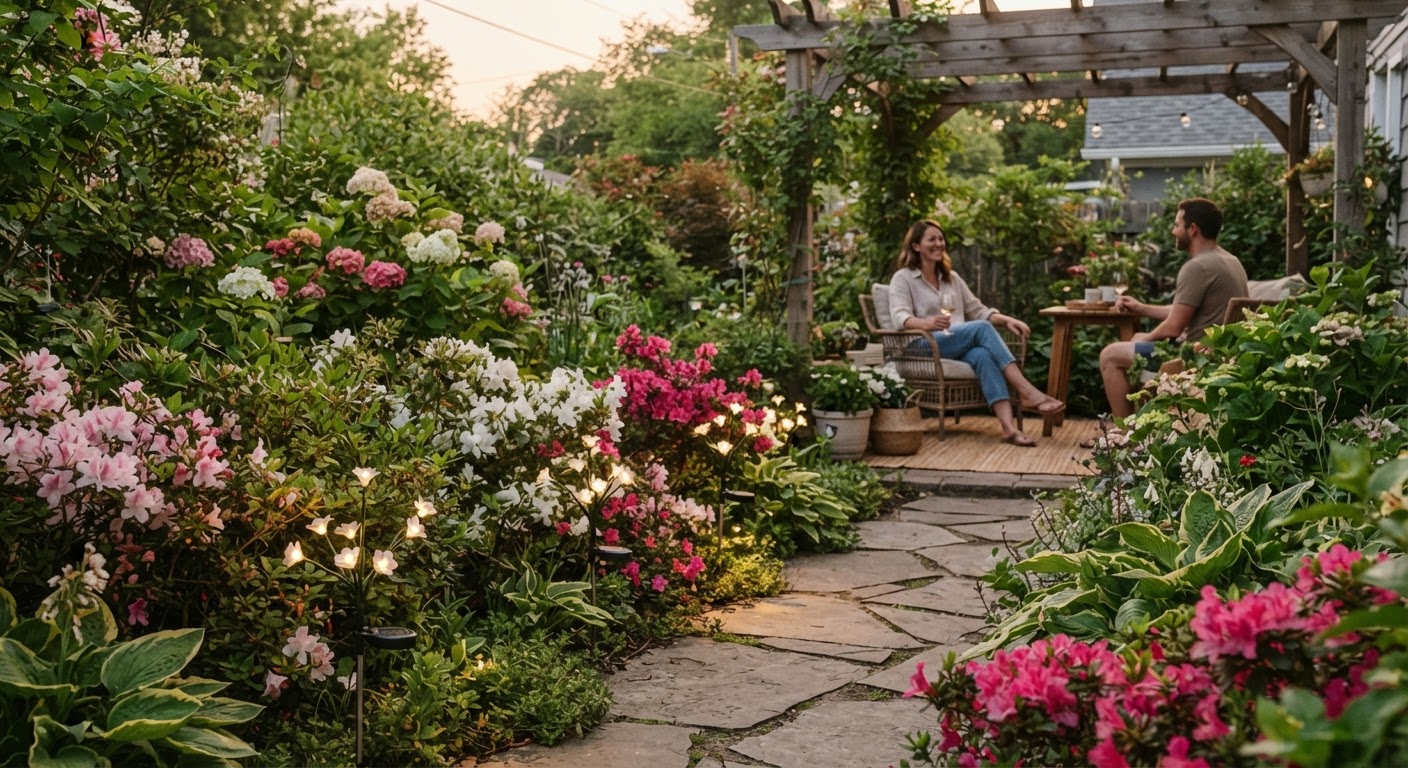
Install solar floral stakes in areas that receive maximum direct sunlight throughout the day. Decorative units featuring 21 simulation azalea flowers are ideal for garden beds, along patio perimeters, near entryways, or defining lawn borders. They feature easy installation for garden, patio, and yard applications without needing power outlets.
Do solar garden lights work in shaded areas or during winter?
Solar panels can still charge under overcast skies or indirect shade, but charging efficiency drops. For optimal nighttime brightness, position units where nearby trees, roof eaves, or tall structures will not block direct sunlight for extended periods.
Read the full guide: How to Brighten Your Garden at Night: The Complete Outdoor Lighting Guide