How to Brighten Your Garden at Night: The Complete Outdoor Lighting Guide
Transforming your outdoor space after sunset starts with understanding how to brighten garden at night effectively. A dark backyard conceals beautiful landscaping, reduces curb appeal, and limits how much time you can spend enjoying your patio or yard during pleasant evenings. By introducing ambient, accent, and path lighting, you can turn a dark landscape into a vibrant nighttime retreat.
Principles of Nighttime Garden Illumination
Effective landscape lighting relies on contrast, depth, and atmosphere rather than harsh, overwhelming floodlights. Instead of blasting your entire yard with bright white light, targeted lighting creates texture and focal points. Highlighting specific botanical features, floral beds, walkways, and seating areas allows you to construct visual hierarchy.
When planning your garden lighting scheme, consider the view from inside your home as well as from the patio. Frame key areas by highlighting perimeter plants and adding warm, colorful accents throughout garden borders. Balancing shadows with gentle ambient illumination yields an inviting space without causing light pollution or glare.
Layering Your Outdoor Lighting Strategy
To achieve a balanced look, divide your outdoor lighting plan into three key layers:
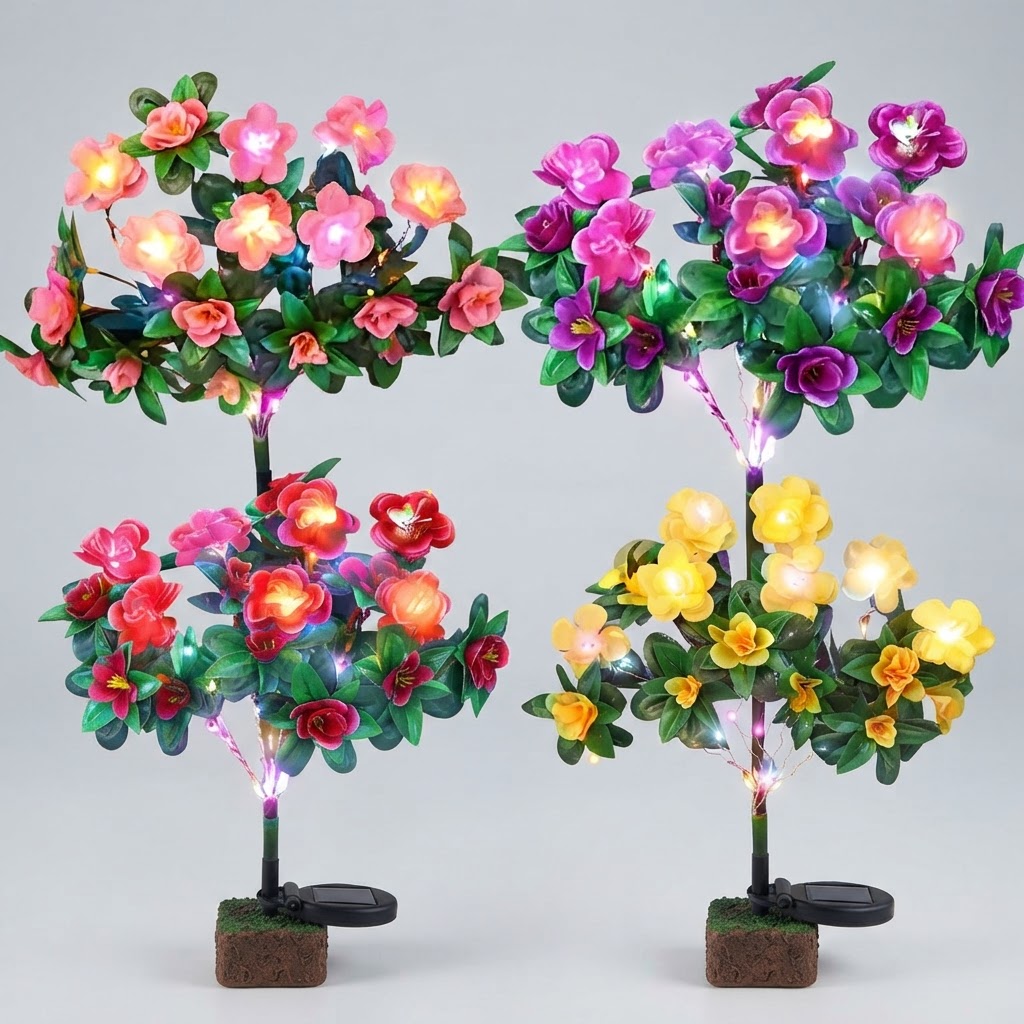
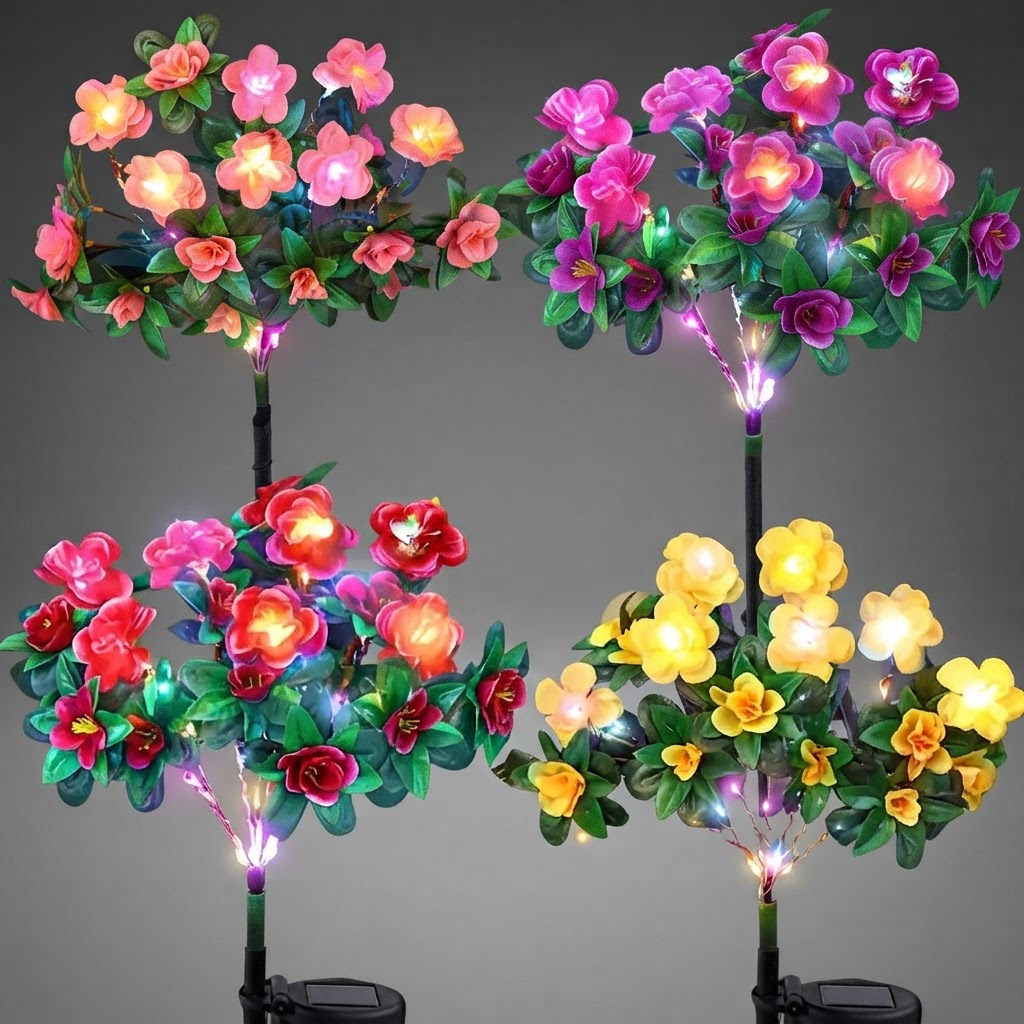
Combining these layers ensures your outdoor space feels warm and cohesive. Decorative elements, such as simulated floral stake lights, add unique color and texture to garden beds while serving as functional accent pieces.
Why Choose Solar Powered Accent Lights
Modern landscape design increasingly relies on solar lighting technology due to its efficiency and hassle-free operation. Traditional hardwired low-voltage lighting requires digging trenches, running electrical wires, and connecting to external power outlets. In contrast, solar-powered accents harvest free energy directly from sunlight during the day.
Solar powered for energy efficiency, standalone fixtures eliminate operating costs and complex wiring projects. They offer complete freedom of placement, allowing you to reposition fixtures whenever your garden landscaping evolves. Furthermore, integrated automatic dusk-to-dawn operation ensures your yard lights up reliably every evening without requiring manual switches or mechanical timers.
Key Features to Look For: Weather Resistance and LED Brightness
When choosing fixtures to brighten your garden, pay close attention to durability and light quality. Outdoor lighting must withstand rain, snow, heat, and frost throughout changing seasons.
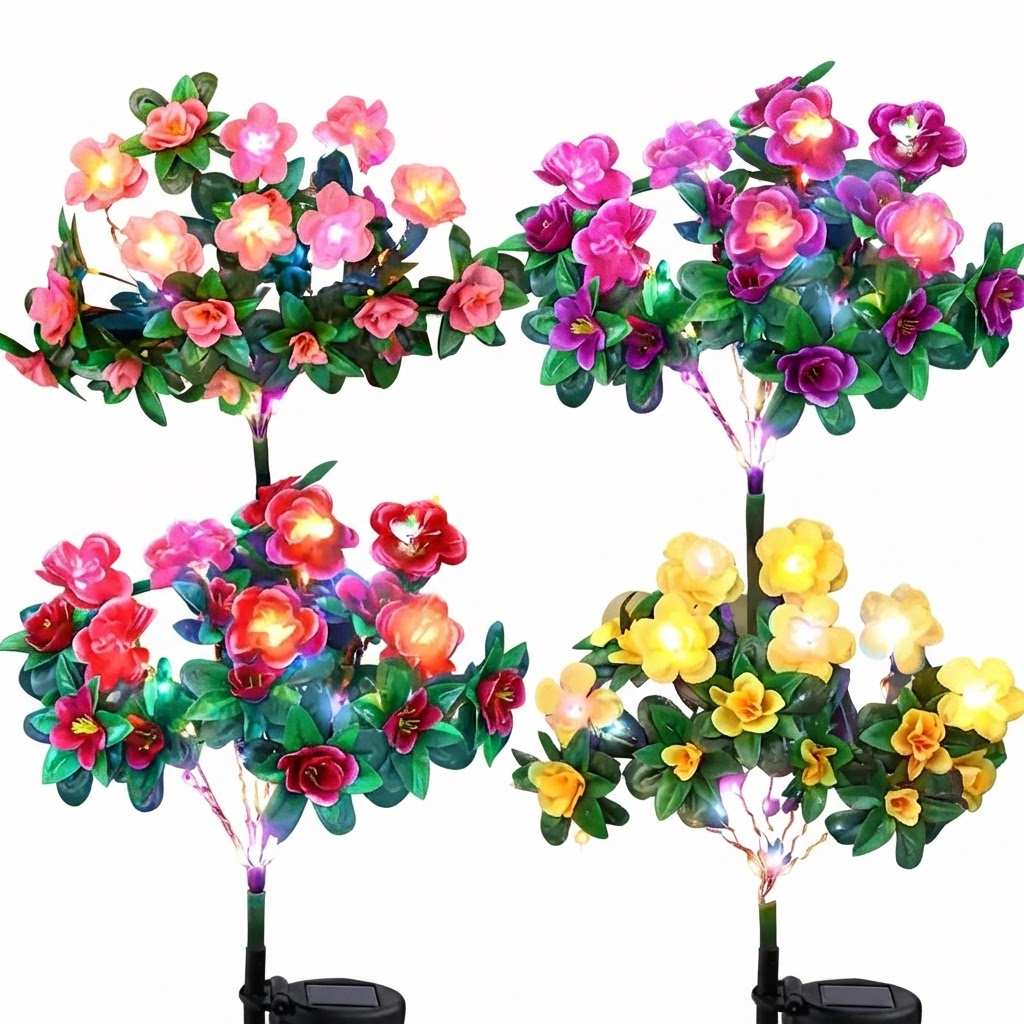
An IP65 waterproof rating guarantees that internal electronic components and high-brightness LEDs remain fully protected against heavy downpours, wind-blown dust, and lawn sprinklers. Durable synthetic materials ensure vibrant decorative elements—such as simulation azalea flowers—retain their color and texture over time without fading or deteriorating under direct solar exposure.
Lighting density also plays a major role in overall atmosphere. Multi-LED stem fixtures featuring 42 high-brightness LEDs dispersed across 21 simulation azalea flowers deliver rich, uniform illumination compared to single-bulb solar stakes. This creates an eye-catching, organic glow that mimics natural flowering plants.
Placement Tips for Pathways, Borders, and Patios
To maximize the visual impact of your garden lights, strategically position them where natural darkness settles:
- Garden Borders: Place decorative flower stakes between low-growing ground cover plants to build depth.
- Patio Corners: Outline outdoor seating structures to establish soft perimeter lighting.
- Pathway Curves: Space fixtures along walkways to gently define direction without creating an artificial runway effect.
- Shrubbery Clusters: Nestle simulation flower lights inside real foliage for a whimsical, glowing floral effect.
Maintaining Your Outdoor Lights Year-Round
Maintaining your garden illumination requires minimal effort. Keep solar collector panels clean by wiping away dust, pollen, and debris with a damp cloth every few weeks. Ensure surrounding foliage does not cast dense shade over the solar panel during peak daylight hours. With simple upkeep and sturdy, weather-resistant fixtures, your illuminated garden will provide a welcoming backdrop for outdoor gatherings throughout every season.
Related in this cluster
- 7 Creative Ways to Illuminate Your Backyard Landscape
- How Solar Garden Lights Work: Dusk-to-Dawn Technology Explained
- How to Install Solar Flower Lights in Your Patio Garden
- Solar Landscape Lights vs. Hardwired Outdoor Lighting
- Upgrade Your Yard with Weatherproof Solar Azalea Lights
- Solar Garden Lights FAQ: Maintenance, Waterproofing, and Setup