
How Solar Garden Lights Work: Dusk-to-Dawn Technology Explained
Solar lighting has revolutionized how homeowners illuminate outdoor spaces. Understanding the mechanics behind solar powered technology helps you choose the right fixtures when evaluating techniques in the main guide.
The Inner Technology of Solar Landscape Lights
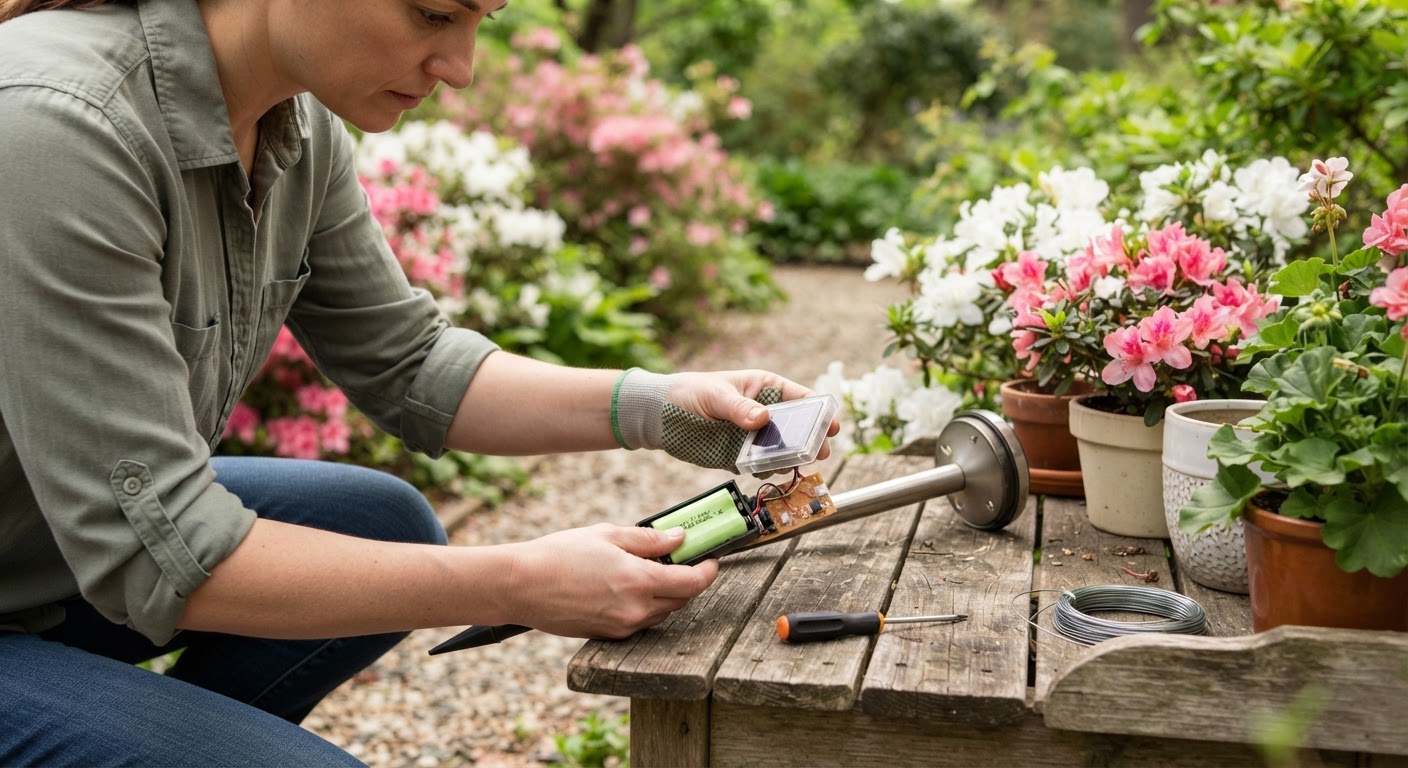
At first glance, a solar accent stake seems simple: a stake pushed into garden soil that lights up automatically at dark. However, inside each self-contained unit is an integrated system designed to harvest, store, and distribute clean energy without external electrical power.
Solar Energy Harvesting During Daylight

Every solar light features a small photovoltaic (PV) panel positioned toward the sky. Throughout the day, sunlight strikes the solar cell, knocking electrons free from silicon atoms to convert solar radiation into direct electrical current (DC). It typically requires 6-8 hours of direct sunlight to fully charge the internal energy cell.
How the Dusk-to-Dawn Sensor Operates
Automatic dusk-to-dawn operation is governed by a photo-resistor or photodiode circuit. During daylight hours, the light sensor detects high ambient brightness and keeps the light circuit open, directing energy strictly into the battery.
As daylight fades, ambient light levels drop below a calibrated threshold. The sensor detects this drop in voltage and automatically closes the light circuit, sending stored energy from the battery directly into the LED array. When dawn arrives, ambient light increases, triggering the sensor to turn off the LEDs and resume solar charging.
Energy Storage and LED Efficiency
The stored power drives ultra-efficient solid-state lights. For instance, fixtures equipped with 42 high-brightness LEDs distribute low voltage efficiently, providing bright illumination for up to 8-10 hours on a complete charge.
Maintaining Optimal Solar Performance
To ensure your dusk-to-dawn sensor and solar panel operate reliably:
- Keep the top solar collector free of dirt, falling leaves, and snow.
- Avoid installing fixtures directly underneath bright streetlights or porch lights, as external light can trick the dusk-to-dawn sensor into staying off.
- Position units where solar collectors receive unobstructed sunlight throughout peak morning and afternoon hours.