Selecting Solar Azalea Lights for Pink Garden Palettes
 Priya RamanSenior Analyst
September 16, 2026. This analysis evaluates the technical and aesthetic considerations for integrating pink solar garden flowers into permanent residential landscapes. It is designed for homeowners and property managers seeking to transition from seasonal plantings to durable, illuminated floral accents.
Effective landscape lighting design requires a systematic approach to color temperature and spatial distribution. Think of it as a matrix of visibility and botanical realism. When selecting pink floral accents, two axes matter here: the chromatic intensity of the petals during daylight hours and the lumen output of the internal LED at night. A common challenge in traditional gardening is maintaining the vibrant hue of pink azaleas, which typically have a brief blooming window. According to the Royal Horticultural Society, maintaining consistent soil pH is critical for the health of live azaleas, yet even with optimal care, their visual impact is fleeting. Solar Azalea Lights bypass these biological limitations, providing a constant visual baseline that remains unaffected by soil chemistry or seasonal shifts. By treating these fixtures as structural elements rather than temporary decorations, designers can create a reliable color anchor in the garden. This is particularly important in regions with harsh climates where live pink blooms are difficult to sustain. Integrating [waterproof solar landscape flowers](/blog/waterproof-solar-landscape-flowers) ensures that the visual investment remains protected against the elements, maintaining the integrity of the pink palette regardless of precipitation levels.
Photo by Artūras Kokorevas on Pexels
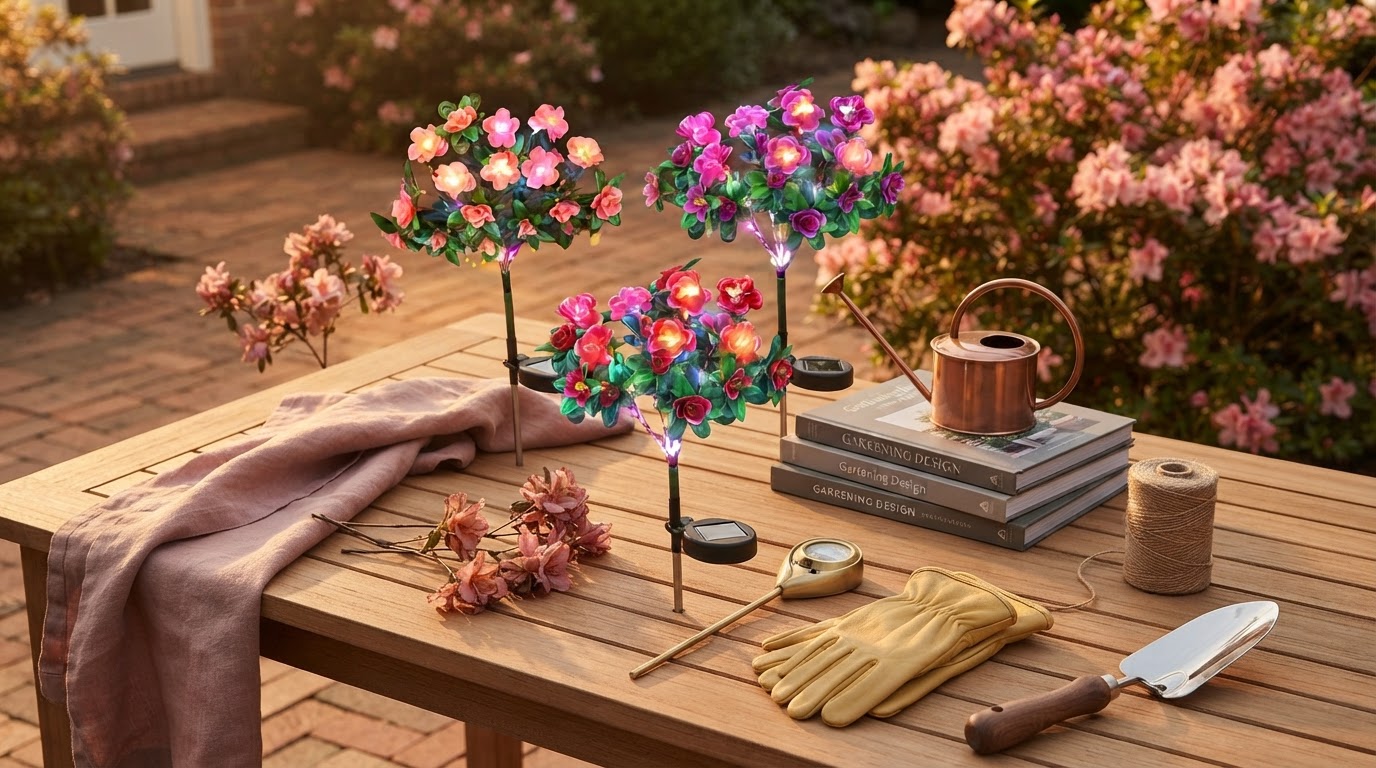
Solar Azalea Lights address the inherent gaps in traditional garden lighting by merging the form factor of a shrub with the utility of a photovoltaic system. The design utilizes high-efficiency monocrystalline solar panels to capture ambient light, which is then stored in internal batteries to power the integrated LEDs. Unlike standard spotlights that can wash out delicate colors, these fixtures utilize internal diffusion to illuminate the pink fabric petals from within. This creates a soft, ambient glow that mimics the natural translucency of a flower petal under moonlight. Once you see it this way, the distinction between functional lighting and decorative art becomes clear. The use of [led pink azalea garden lights](/blog/led-pink-azalea-garden-lights) allows for a targeted color temperature that enhances the specific pink wavelengths, preventing the "muddy" look often associated with low-quality outdoor LEDs. Furthermore, the physical construction often involves [artificial solar flower stakes](/blog/artificial-solar-flower-stakes) that are engineered for UV resistance. This ensures that the pink pigment does not fade into a dull white after a single summer of sun exposure. Because these units are self-contained, they eliminate the need for trenching or external wiring, allowing for precise placement among existing foliage to fill gaps where natural light might be insufficient for live flowering plants. The inclusion of [outdoor solar azalea stake lights](/blog/outdoor-solar-azalea-stake-lights) provides the necessary height variability to layer the lighting effect, creating depth in the garden bed that flat lighting cannot achieve.
Selecting the appropriate fixture requires a rigorous decision framework to ensure the hardware matches the environmental demands of the site. The decision rule: prioritize the ingress protection (IP) rating and battery capacity over petal count to ensure long-term performance. A high-quality pink solar flower must be able to withstand both UV degradation and moisture ingress while providing enough stored energy to last through the early morning hours. When evaluating options, consider the placement of the solar cell relative to the floral head; the cell must have an unobstructed path to the sky, even if the petals are nestled within other greenery. This may require the use of outdoor solar azalea stake lights with adjustable stems or remote panels.
- Verify the IP65 or higher waterproof rating to ensure durability against irrigation systems and heavy rain.
- Assess the solar panel surface area to ensure it can reach a full charge in 6-8 hours of direct sunlight.
- Check the petal material for UV-stabilized polymers to prevent color bleaching in high-heat zones.
- Evaluate the stake material, opting for stainless steel or reinforced ABS to prevent snapping in high winds.
- Confirm the presence of an intelligent light sensor for automatic dusk-to-dawn operation.
Shop Solar Azalea Lights here: https://solyraazalealights.com