Enhancing Natural Landscaping with Solar Azalea Lights
 Jordan HaleStaff Writer
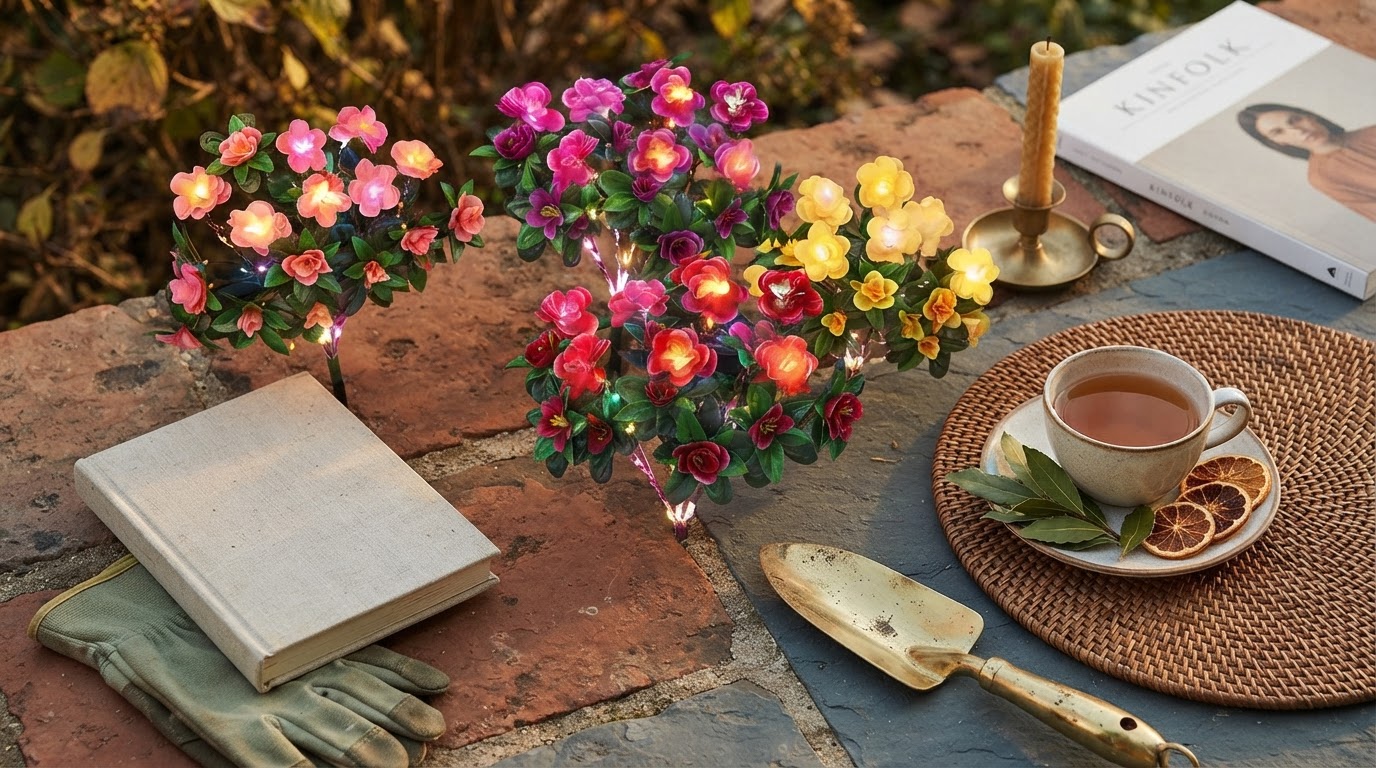
This evaluation explores the practical integration of artificial solar flower lights within existing residential landscapes. It is written for homeowners seeking to maintain a vibrant garden aesthetic during dormant seasons without increasing utility costs. standing on my back porch last November, watching the last of the perennials retreat into the gray soil. The garden felt hollow, a skeleton of its summer self. the lack of color fundamentally changed my mood when I looked out the window. According to the Old Farmer's Almanac, seasonal transitions often leave gardeners with significant gaps in visual interest, particularly in zones where frost prevents year-round blooming. This seasonal void is where the concept of artificial lighting meets botanical design. Many homeowners struggle with the dilemma of wanting a lush, illuminated space without the high maintenance of delicate annuals or the complexity of hardwired electrical systems. Finding a balance between the organic feel of a living garden and the reliability of modern technology requires a specific type of hardware. You need something that doesn't just sit on top of the mulch but feels woven into the greenery. While traditional path lights offer utility, they often lack the soft, petal-diffused glow that transforms a dark corner into a focal point. This is particularly true when trying to find the best solar landscape flowers 2024 that can withstand the shift from late summer heat to autumn winds. Solar Azalea Lights address these environmental challenges by mimicking the structural complexity of a true Rhododendron bloom while housing an autonomous power system. The units utilize high-efficiency monocrystalline solar panels integrated directly into the stem structure, allowing them to capture energy even when tucked among taller shrubs. It turns out that the placement of these panels is critical; if they are too low, they are shaded by the very foliage they are meant to complement. These lights are designed with flexible, weather-resistant materials that allow the "branches" to be posed, creating a more natural silhouette than rigid plastic alternatives. They didn't have that glossy, artificial sheen that typically gives away a faux plant. Instead, they caught the fading afternoon light in a way that felt authentic to the space. The internal LED is positioned to glow through the layers of the flower head, creating a soft luminance rather than a harsh beam. This makes them ideal for layering with artificial solar flower stakes to create depth in a flower bed. Because the system is self-contained, there is no need for trenching or external wiring, which preserves the root systems of your existing live plants. Selecting the right placement for these fixtures requires a framework that considers both solar gain and visual harmony. Somewhere around week two of testing, the most effective displays weren't the ones lined up in a straight row, but those clustered in groups of three or five to mimic natural growth patterns. You must also account for the technical requirements of the internal batteries. To ensure you are choosing a fixture that will last through multiple seasons, consider this decision framework: Verify the IP rating to ensure they are waterproof solar landscape flowers capable of handling heavy rain and irrigation spray. Check the solar conversion rate of the panel to ensure it can reach a full charge in 6-8 hours of indirect sunlight. Assess the stem flexibility to ensure the light can be integrated into existing bushes without snapping. Match the color temperature of the LED to your existing landscape lighting to avoid clashing hues. * Look for dusk-to-dawn sensors that automate the lighting cycle without manual intervention. Integrating these into a larger design strategy often involves mixing them with other artificial solar flower stakes to vary the height and texture of the illuminated area. By focusing on the structural integrity of the petals and the efficiency of the solar cell, you can create a nighttime garden that feels intentional rather than cluttered. The goal is to enhance what is already there, providing a bridge of light and color that persists even when the natural blooms have faded for the year. Solar Azalea Lights provide a reliable way to maintain your garden's visual appeal through every season. By choosing high-quality, weather-resistant designs, you ensure your outdoor space remains a source of beauty long after the sun goes down. Shop Solar Azalea Lights here.