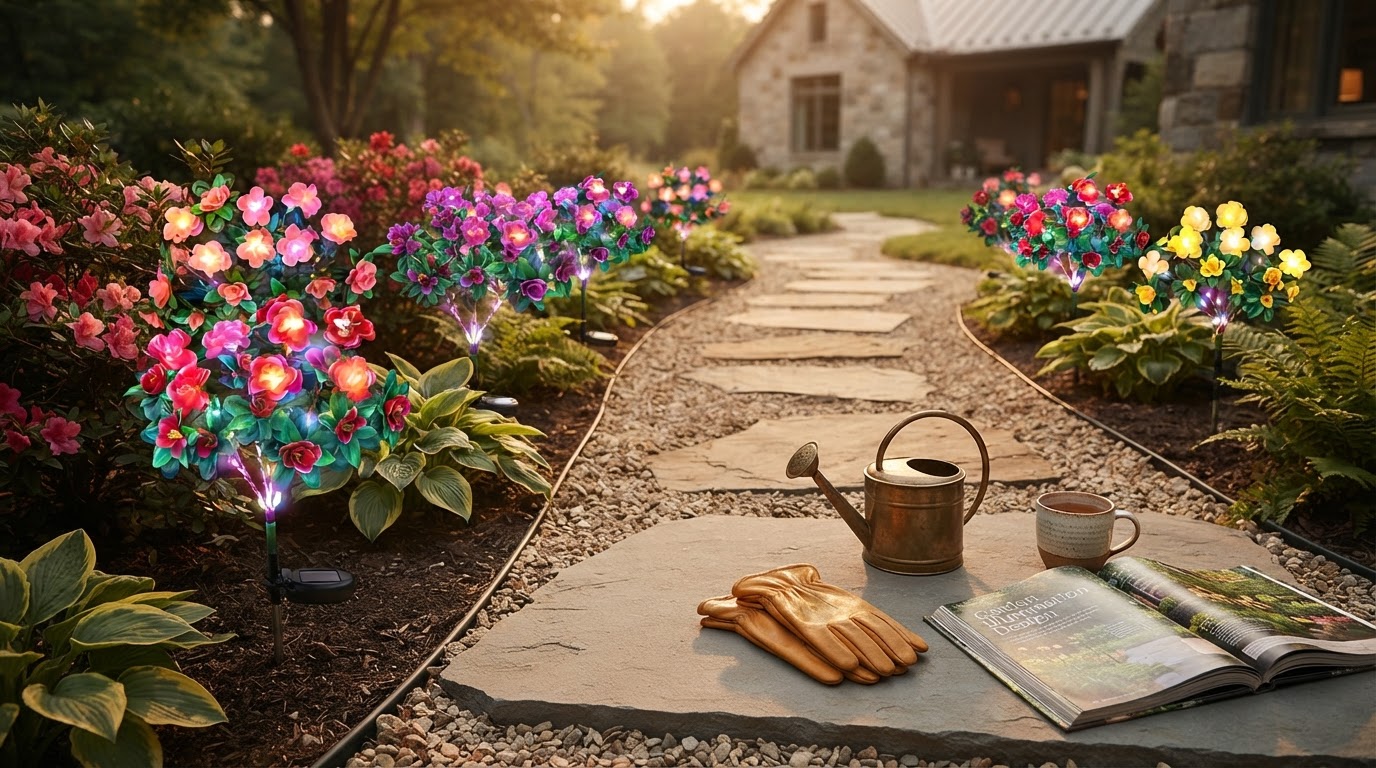
Enhancing Walkway Safety with Solar Azalea Lights
 Priya RamanSenior Analyst
October 21, 2026. This analysis evaluates the integration of solar-powered floral illumination into residential landscape architecture. It serves as a technical resource for homeowners seeking to balance navigational safety with botanical aesthetics.
The Challenge of Residential Path Illumination
Effective landscape lighting is defined by its ability to resolve the tension between visibility and light pollution. When planning a garden layout, two axes matter here: the functional lumen output required for safe passage and the aesthetic temperature of the light source. Standard utility lighting often fails by being either too abrasive, creating a "runway" effect, or too dim to highlight elevation changes in a path. According to Super Bright LEDs, professional-grade LED path lights are typically evaluated by their ability to provide drop-in reliability while matching specific landscape needs through interchangeable bulb temperatures. However, for the average consumer, the barrier to entry for wired cast-brass systems is high due to installation costs and permanent trenching requirements. Without adequate lighting, walkways become navigational hazards, particularly in areas with dense foliage or uneven terrain. This problem is compounded by the seasonal shift in garden density; a path that is clear in winter may be obscured by spring growth, requiring a lighting solution that is as dynamic as the garden itself. Integrating [outdoor solar flower lights](/blog/outdoor-solar-flower-lights) provides a flexible alternative to fixed systems, allowing for seasonal adjustments without technical intervention.
Architectural Integration of Solar Azalea Lights
Think of it as a matrix of height and dispersion. Solar Azalea Lights address the limitations of traditional stake lights by utilizing a multi-head floral design that mimics the natural structure of a shrub. These fixtures typically stand at 27.56 inches tall with a width of 14.96 inches, providing a broader footprint of light than single-point LED stakes. This specific geometry ensures that the light is not just projected downward onto the soil, but also outward across the surrounding flora. As noted in a recent demonstration by Sam's Club on YouTube, LED solar lights used for garden borders must provide enough clarity to define the edge of a walkway while remaining decorative. The Solar Azalea Lights design achieves this through high-efficiency monocrystalline solar panels that power multiple LED nodes embedded within the petals. This creates a soft, diffused glow that prevents the harsh glare often associated with low-cost solar units. By placing these units alongside [waterproof solar garden stakes](/blog/waterproof-solar-garden-stakes), homeowners can create a layered lighting effect that guides the eye through the space. The use of [solar powered landscape flowers](/blog/solar-powered-landscape-flowers) ensures that the hardware of the light disappears into the garden bed during the day, maintaining the natural look of the azalea bushes while preparing for nighttime activation. Once you see it this way, the light fixture becomes a structural element of the garden rather than just a utility.
Framework for Path Light Selection and Placement
The decision rule for selecting path lighting is based on the intersection of foot traffic frequency and ambient darkness levels. When deploying Solar Azalea Lights, the placement strategy should prioritize transition points—areas where a path turns, steps up, or meets a doorway. Unlike traditional spotlights, these floral LEDs provide 360-degree illumination, which is essential for peripheral awareness. As highlighted in a showcase on Instagram by Cherry Solar light, these fixtures are designed to provide a soft garden glow day after day, emphasizing the importance of weatherproofing in long-term outdoor reliability. To ensure optimal performance, the following criteria should be met during the installation process:
- Direct Sunlight Exposure: Ensure the solar panel receives a minimum of six hours of unshaded light to maintain full battery discharge capacity at night.
- Spacing Density: Place units approximately three to four feet apart to avoid dark spots while maintaining the visual rhythm of the floral design.
- Ground Clearance: Install the stake deep enough to withstand wind, but high enough that the LED petals are not obscured by ground cover.
- Color Coordination: Utilize the pink, purple, or orange variants to complement existing blooms or provide contrast against evergreen shrubbery.
- Path Integration: Align the lights slightly behind the physical border of the path to prevent accidental contact while maximizing the throw of light across the walking surface.
Shop Solar Azalea Lights here: https://solyraazalealights.com
Sources

Photo by Unggul Budi on Pexels
- Solar Ground Lights Outdoor Azalea Flowers LED Pathway Lights ... - eBay
- Cherry Solar light - Instagram
- LED Path Lights for Walkways & Gardens - Super Bright LEDs