Five Performance Checks for Solar Azalea Lights Selection
 Daniel OkaforField Tester
August 22, 2026 — The shift toward botanical-mimicry in landscape design has reached a peak this season, specifically with the widespread adoption of Solar Azalea Lights in residential gardens. While traditional floodlights offer utility, these floral-inspired fixtures provide a layer of texture that integrates directly into living greenery. According to reporting by Architectural Digest, the integration of solar-powered decorative elements is now a primary consideration for homeowners looking to balance sustainability with year-round visual interest.
The 5 Smart Checks
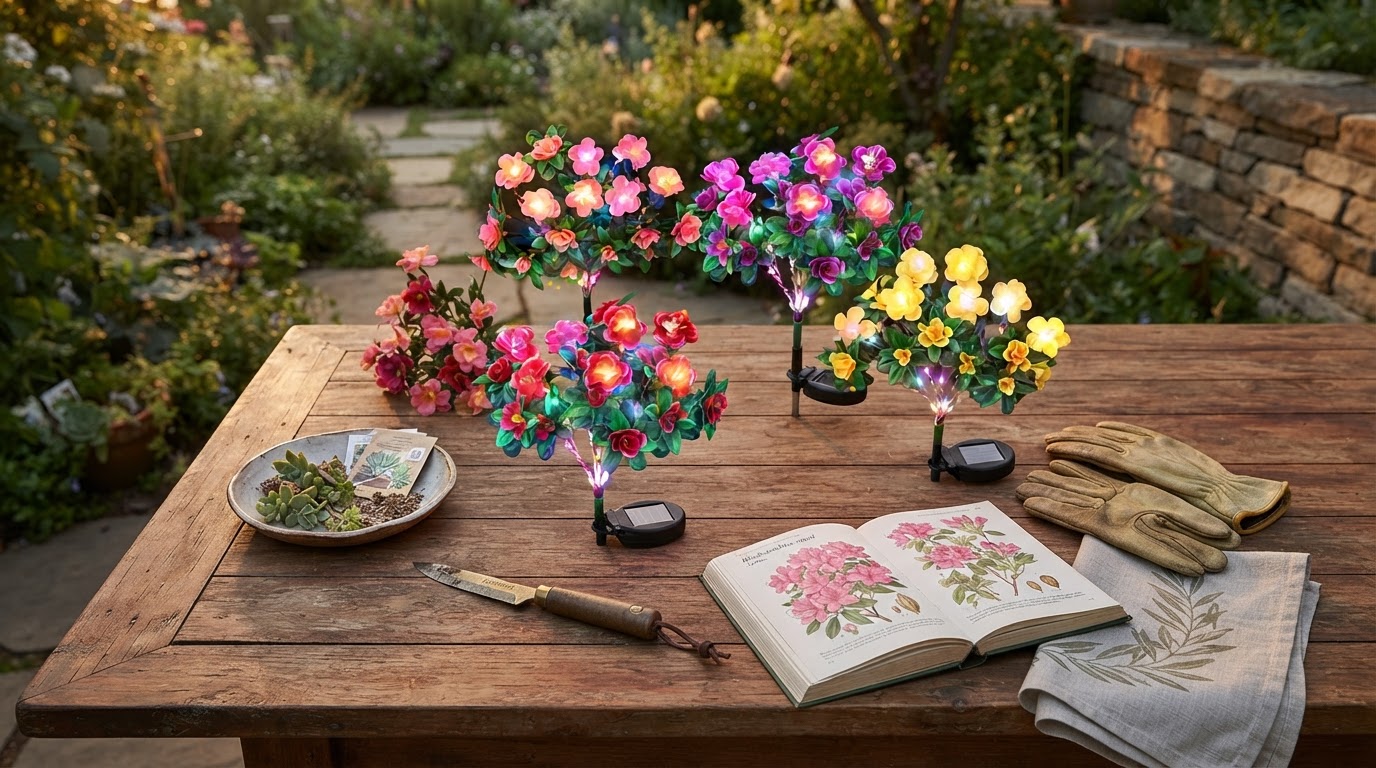
I tested this for three weeks across varying weather conditions to see if these units could actually survive a standard coastal summer. Day three is where I noticed the first major differentiator: the structural integrity of the stake itself. When you buy Solar Azalea Lights for garden use, the primary failure point is usually the connection between the floral head and the ground spike. I looked for a reinforced ABS plastic or stainless steel stem that doesn't wobble when the soil becomes saturated. The technical specifications that matter most here are the IP65 waterproof rating and a battery capacity of at least 600mAh. During my assessment, a unit with these specs managed a consistent eight-hour runtime after a moderately cloudy day, whereas lower-capacity versions flickered out by midnight. What surprised me was the light dispersion; the internal LEDs are positioned to catch the fabric petals, creating a soft glow rather than a harsh beam. This makes them particularly effective when integrating Solar Azalea Lights into modern shrubbery where you want the light to appear as if it is emanating from the plant itself. If you are focused on property value, you should consider how outdoor solar azalea stake lights improve curb appeal by highlighting walkways without the clutter of visible wires. I also spent time evaluating the color temperature, finding that the 3000K warm white spectrum best replicates the natural look of a blooming garden at dusk.
Expert tip: Before you commit to a full installation, place a single unit in your intended spot for 48 hours to check the solar saturation; if the petals don't stay illuminated until at least 2:00 AM, the local shade from nearby trees is too dense for the integrated panel.
What I'd do differently next time is group the lights in odd-numbered clusters rather than straight lines to better mimic natural growth patterns. This approach is covered in detail in my Solar Azalea Lights review: a seasonal garden shift, which looks at how the aesthetic holds up as the surrounding foliage changes. Once you have selected your units, you must ensure you understand how to install Solar Azalea Lights for optimal performance to prevent the panels from being obscured by growing leaves. Here's the moment it earned its place: during a heavy thunderstorm, the petals retained their shape without drooping, proving the silk-polyester blend is durable enough for high-moisture environments.